Walk into any commercial print shop in India today and you’ll notice the same pressure everywhere: more jobs, tighter deadlines, and clients who expect flawless output every single time. Print buyers no longer distinguish between “good enough” and “excellent” they simply expect excellent, and they expect it fast.
This shift is reshaping how commercial printers think about their equipment. Producing more in less time, holding print quality steady across long runs, cutting material waste, controlling operating costs, and avoiding costly downtime are no longer nice-to-haves they are the baseline requirements for staying competitive.
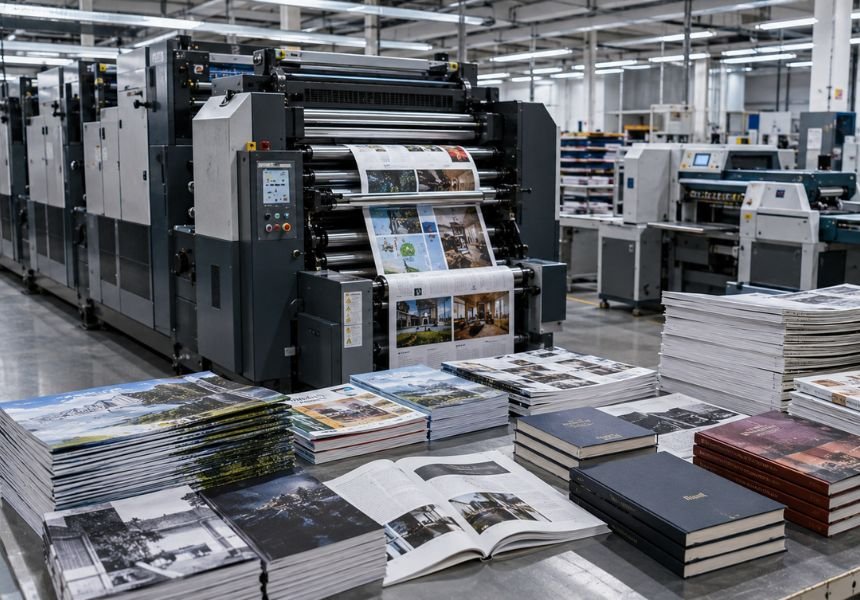
At the centre of this transformation are modern offset printing machines. Far removed from the manually intensive presses of a decade ago, today’s offset printing machines combine mechanical precision with automation, monitoring, and process control that fundamentally change what a pressroom can achieve. For printing press owners and production managers trying to decide where to invest next, understanding exactly how this technology has evolved and what it means for the bottom line has never mattered more.
The Changing Landscape of Commercial Printing in India
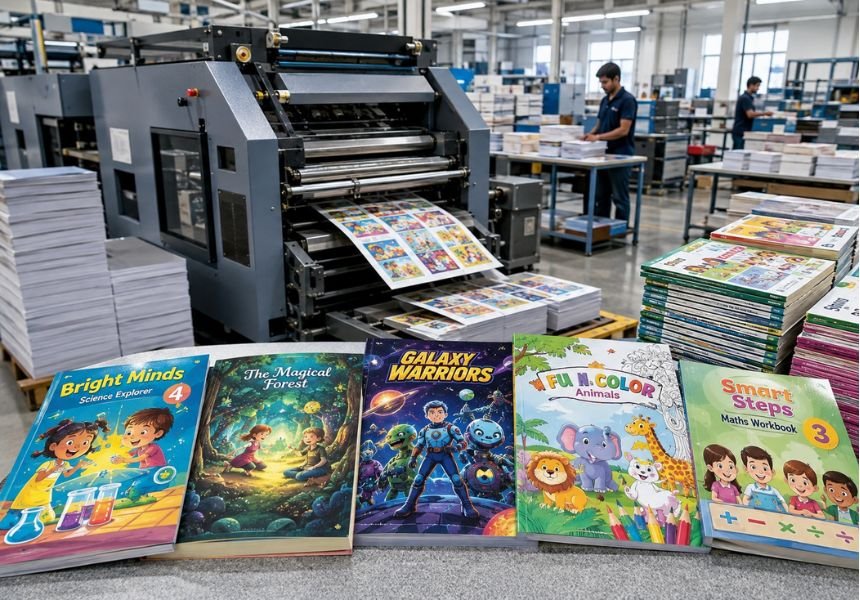
India’s commercial printing industry is under more pressure than ever to perform. Demand for high-volume printing continues to grow across books, packaging, commercial stationery, financial forms, and promotional material, and clients are pushing for shorter turnaround windows without compromising on finish quality.
At the same time, competition among printers has intensified. Buyers can compare quotes, quality, and delivery timelines across multiple vendors in the time it takes to send an email, which means a single missed deadline or inconsistent print run can cost a printer future business. Rising costs of paper, ink, and skilled labour add further pressure on margins, making operational efficiency a survival skill rather than a bonus.
Reliability has become just as important as capability. A press that frequently breaks down or requires lengthy manual recalibration between jobs eats directly into profitability. This is why more Indian commercial printers are actively looking at automation and digital monitoring not as futuristic add-ons, but as practical tools to keep production predictable in an unpredictable market.
What Makes Modern Offset Printing Machines Different?
Traditional offset printing machines relied heavily on operator skill and manual adjustment. Getting a press dialled in for a job registration, ink balance, plate alignment could take a significant chunk of the working day before a single saleable sheet came off the press.
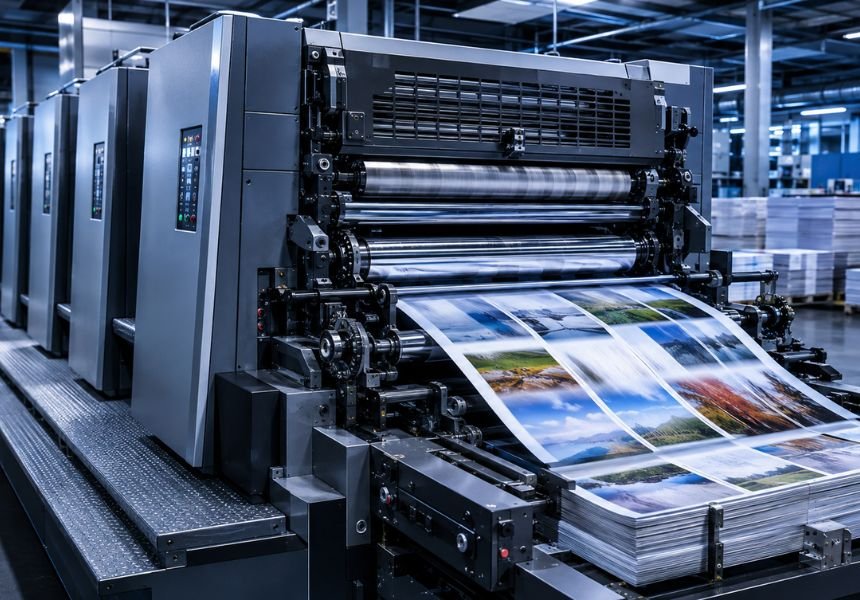
Modern offset printing machines close much of that gap. The core printing process is still offset lithography, but the systems around it controls, feedback loops, and mechanical tolerances have been re-engineered for speed and consistency. In practical terms, that translates into:
- Faster production speeds without sacrificing print quality
- Improved automation of repetitive setup tasks
- Better process control over ink, registration, and impression
- Reduced setup and makeready time between jobs
- Greater consistency from the first sheet to the last
- More precise operator control over press parameters
- Advanced monitoring of press performance in real time
- Higher overall production reliability and fewer unplanned stoppages
The real business benefit isn’t any single feature; it’s what these improvements add up to: a press that spends more of its working hours actually printing, and less time being adjusted, corrected, or repaired.
How Modern Offset Printing Machines Improve Productivity
Productivity in a pressroom isn’t just about how fast a machine can run it’s about how much saleable output it produces across a working shift, a week, or a month. Modern offset printing machines improve productivity from several directions at once.
Faster makeready is one of the most significant gains. When plate changes, ink adjustments, and registration can be handled more quickly and with fewer manual steps, presses spend less time between jobs and more time printing. Reduced downtime follows a similar logic: better-engineered mechanical components and more responsive controls mean fewer stoppages for adjustment, and issues that do arise can often be identified and corrected faster.
Higher production speeds matter for high-volume work, but only when they’re paired with process stability a fast press that produces inconsistent sheets isn’t actually more productive, because reprints erase the time saved. This is where automated processes and efficient job changeovers come in: they help presses move from one job to the next with less manual intervention and less risk of error.
Taken together, these improvements support better production planning. When a press owner can predict, with reasonable confidence, how long a job will take from setup to completed run, scheduling becomes more reliable, promise dates become easier to keep, and the whole operation runs with less firefighting.
Better Print Quality and Consistency
For commercial printers, consistency is often the real product being sold. A packaging brand, a publisher, or a financial institution isn’t just buying ink on paper they’re buying the assurance that page 1 will look exactly like page 10,000.
Modern offset printing machines are built to support this kind of consistency across several dimensions:
- Colour consistency, so tones don’t drift as a long run progresses
- Registration accuracy, keeping multiple colours and both sides of a sheet precisely aligned
- Faithful image reproduction, preserving fine detail and tonal range
- Stability across long print runs, not just the first few hundred sheets
- Built-in quality control checkpoints during production
- Repeatable results between jobs and between reprints of the same job
This matters commercially because inconsistency is expensive in ways that don’t always show up immediately. A slightly off-colour batch might still be usable, but it damages trust; a batch that’s rejected outright means wasted paper, wasted press time, and a client who has to explain a delay to their own customer. Consistent quality, by contrast, reduces reprints, protects margins, and quietly builds the kind of reputation that keeps clients coming back without having to renegotiate on price every time.
The Role of Automation in Modern Printing Presses
Automation has changed what happens on the pressroom floor, but it’s worth explaining in plain terms rather than technical jargon. In simple language, automation means the press itself handles more of the repetitive, precision-dependent tasks that used to require constant manual input while the operator focuses on decisions, oversight, and problem-solving.
In a modern press, this shows up as automated press controls that adjust and hold settings rather than requiring constant manual tweaking, faster job setup because presets and controls reduce guesswork, and automated production processes that keep parameters steady throughout a run without an operator having to intervene at every stage.
The result is reduced manual intervention, which doesn’t mean fewer skilled people are needed it means those people spend their time on higher-value work instead of repetitive adjustment. Automation also supports improved process consistency, since machine-controlled parameters tend to drift less than manually managed ones, and faster troubleshooting, because deviations are easier to spot and trace back to a cause. Altogether, this adds up to genuine production optimisation: more predictable output from the same equipment and the same working hours.
Reducing Waste and Improving Production Efficiency
Waste is one of the quietest profit-killers in commercial printing, precisely because it accumulates gradually rather than showing up as one obvious cost. Modern offset printing machines are engineered to reduce waste at several points in the production process.
- Paper waste during makeready and long runs
- Ink waste from inconsistent flow or poor control
- Setup waste generated while a press is being calibrated
- Production errors that result in unusable sheets
- Downtime that stalls a job mid-run
- Reprints caused by quality issues discovered too late
Each of these connects directly to the bottom line. Lower material waste means lower operating costs on every job, not just the large ones. Better resource utilisation means paper, ink, and press time are spent producing saleable output rather than being absorbed by correction and rework. Over time, this shows up as improved production efficiency and, ultimately, greater profitability — without needing to raise prices or take on more volume than the business can comfortably handle.
Why Real-Time Production Monitoring Matters
A press that runs well today doesn’t guarantee it will run well tomorrow. Mechanical wear, environmental conditions, and small process drifts accumulate over time, which is why more commercial printers are looking for real visibility into what’s actually happening on the shop floor — not just after a job is finished, but while it’s running.
Production monitoring tools help teams track machine performance against expected benchmarks, keep an eye on production progress across multiple jobs at once, and flag problems early enough to act on them rather than discovering them once a run has already gone wrong. This kind of visibility reduces unexpected downtime, because issues are caught before they escalate into a full stoppage, and it improves decision-making, since managers can act on current data instead of guesswork or end-of-shift reports.
This is where smart, app-based production monitoring is increasingly finding its place in Indian pressrooms. Tools that give operators and owners cloud-connected visibility into press performance — accessible from a phone or a desktop — mean production efficiency is no longer something you find out about after the fact. It becomes something you can actively manage in real time, which is a meaningful shift for how pressroom teams plan their day.
Choosing the Right Offset Printing Machine for Your Business
Investing in a new offset printing machine is a significant decision, and the right choice depends heavily on the specifics of your business rather than any single “best” machine on the market. A few factors are worth evaluating carefully before committing:
- Print volume: What is your realistic monthly and peak-season output, and does the machine comfortably support it?
- Sheet size and format: Does the press match the paper sizes and formats your typical jobs require?
- Production speed: Is the rated speed achievable on the stocks you actually run, not just under ideal conditions?
- Automation capabilities: How much of makeready, registration, and ink control is automated versus manual?
- Print quality: Can the press reliably hold colour, registration, and detail across long runs?
- Machine reliability: What is the build quality of core components like cylinders, rollers, and drive systems?
- Maintenance requirements: How demanding is routine upkeep, and what does it cost in downtime and parts?
- Service and technical support: How quickly can a technician respond if something goes wrong?
- Operational efficiency: Does the machine reduce waste and setup time in ways that offset its running costs?
- Long-term return on investment: Does the total cost of ownership not just the purchase price make sense for your growth plans?
A press that looks impressive on a spec sheet isn’t automatically the right fit. The most productive investment is usually the one that matches your actual job mix, your production volume, and your team’s ability to operate and maintain it backed by a manufacturer who will still be answering the phone three years after installation.
Ready to Upgrade Your Printing Production?
Modern offset printing technology isn’t just about running faster — it’s about building a pressroom that can consistently deliver on productivity, print quality, and reliability, run after run. Businesses that make this shift typically find that the gains compound: less time lost to setup and correction, less material wasted on avoidable errors, and more capacity to take on the high-volume work that drives real growth.
Whether you’re evaluating your first major press upgrade or planning to expand an existing production line, the right offset printing machine paired with the right support can make a measurable difference to how your business operates day to day. It’s a decision worth making with a partner who understands the realities of the Indian printing industry, not just the specifications on a brochure.
IRIS Grafitec’s Perfecto Series and Smart Production App are built around exactly this kind of long-term partnership. If you’re exploring a new offset printing machine or looking to modernise your current production setup, the team at IRIS Grafitec is ready to discuss your specific requirements and help you find the right fit for your business.
Website: https://irisgrafitec.com/
Email: pbatra@bapindia.in