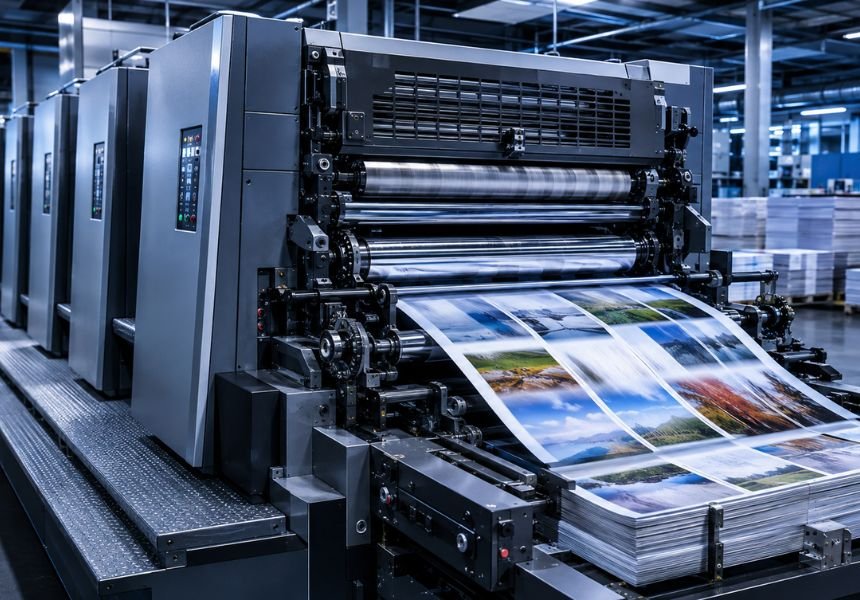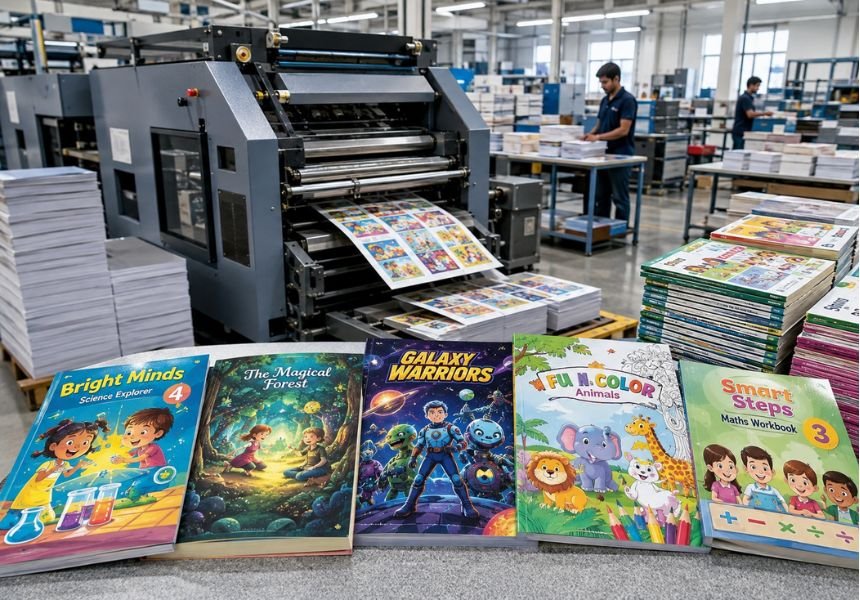
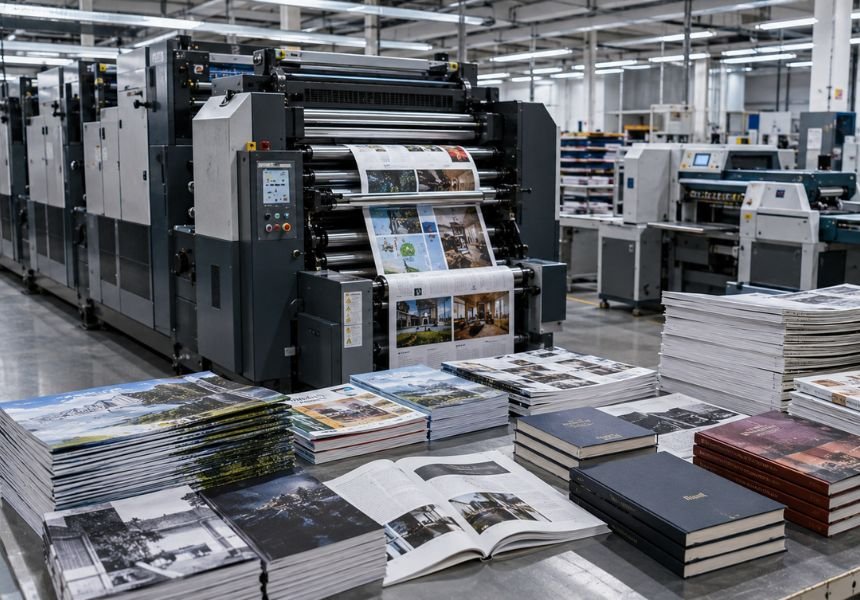
Printed publications still carry weight in a way screens don’t quite replicate. A well-made magazine, a hardcover book, or a corporate annual report communicates effort and credibility before a single page is turned. That’s why magazine and book printing remains a core service for publishers, businesses, institutions, and independent authors who want their work to exist as something tangible.
Modern printing and manufacturing can take a digital design, a manuscript, a set of photographs, or an editorial layout and turn it into a finished, professionally bound publication. The process involves far more than sending a file to a printer. It includes pre-press preparation, precision printing, cutting, folding, binding, finishing, and quality control — each stage shaping how the final product looks and feels.
This guide walks through how professional magazine and book printing actually works, what a modern printing facility can produce, and what to consider whether you’re publishing a magazine, printing custom books, or producing catalogs, journals, annual reports, or notebooks.
What Is Magazine & Book Printing?
Magazine and book printing refers to the complete process of turning designed content into a finished, bound publication at commercial scale. It’s different from simply printing a document on an office printer. Commercial printing and manufacturing involve specialized equipment, trained production staff, and a structured workflow built to produce consistent results across dozens, hundreds, or thousands of copies.
A typical production sequence looks like this:
- Design & Artwork: The content and layout are finalized
- Pre-Press: Files are checked and prepared for the press
- Printing: Pages are printed at scale
- Cutting: Sheets are trimmed to the correct size
- Folding: Pages are folded into signatures where needed
- Binding: Pages are joined together
- Finishing: Covers and pages receive their final treatment
- Quality Control: Every batch is checked before it ships
- Packaging: Finished copies are prepared for delivery
Each stage affects the next. A pre-press error shows up in the final print. A binding choice made without considering page count can affect how a book lies open. Understanding this chain helps anyone commissioning a print run make better decisions.
What Can a Professional Printing Facility Manufacture?
A commercial printing operation isn’t limited to one type of product. The same core equipment and expertise presses, binding lines, finishing tools can be applied across a wide range of publications.
Magazine Printing
Magazines cover a broad category: monthly consumer magazines, corporate and internal magazines, industry and trade publications, lifestyle titles, and institutional newsletters. What they share is a dependence on consistent color, sharp image reproduction, and reliable page layout across every copy in the run. Paper selection also matters a lifestyle magazine with heavy photography needs a different stock than a text-driven trade publication.
Custom Book Printing
Custom book printing covers business books, educational and reference titles, training manuals, technical documentation, coffee-table books, and other professional publications. Because books vary so much in purpose, specifications are typically tailored project by project; trim size, paper weight, cover material, and binding method are all chosen based on how the book will be used and how long it needs to last.
Catalog & Brochure Printing
Catalogs and brochures serve a more commercial purpose: presenting products, services, or a company’s portfolio in a format that’s easy to browse. These pieces tend to be image-heavy, so color accuracy and paper finish play a bigger role in how professional the final piece looks.
Journals & Notebooks
Notebooks, planners, and workbooks are a different production challenge altogether; they’re built for writing rather than reading. Paper opacity, binding flexibility, and how well the book lies flat all matter more here than in a typical magazine run.
Annual Reports & Corporate Publications
Annual reports, corporate profiles, and internal communication materials often represent a company to shareholders, partners, or the public. These publications tend to combine data-heavy layouts with strong design, which puts extra weight on print clarity and finishing quality.
The Complete Magazine & Book Printing Process
Here’s a closer look at each stage of production, from a raw file to a finished publication.
Step 1: Artwork & File Preparation
Print-ready artwork correctly sized, with the right resolution and color mode is the foundation of a clean print run. Files prepared properly at this stage save time and prevent costly reprints later.
Step 2: Pre-Press
Before anything reaches a press, files are checked for bleed, color profiles, image resolution, embedded fonts, and correct page arrangement. This step catches problems while they’re still easy to fix.
Step 3: Professional Printing
Modern printing machinery is built to hold consistent color and sharp detail across long runs, whether that’s a 500-copy custom book or a 10,000-copy magazine issue.
Step 4: Cutting & Folding
Printed sheets are trimmed to final size and folded into signatures with tight tolerances, since even small inconsistencies become obvious once pages are bound together.
Step 5: Binding
The right binding method depends on page count, intended use, and how durable the final product needs to be:
- Perfect binding: glued spine, common for paperbacks and thicker magazines
- Saddle stitching: stapled spine, suited to shorter magazines and booklets
- Hardcover binding for books meant to last and hold their shape
- Spiral binding for notebooks, manuals, and publications that need to lie flat or fold back
- Other binding methods chosen to match the specific project
Step 6: Finishing
Finishing is where a printed piece gets its final look and feel — matte or gloss lamination, spot UV effects, embossing, foiling, or other customized treatments depending on the publication.
Step 7: Quality Control
Before anything ships, finished copies are checked for color consistency, page alignment, print clarity, binding integrity, and overall finishing quality.
Step 8: Packaging & Dispatch
Finished publications are inspected, packed to prevent damage in transit, and prepared for delivery to the client or distribution point.
How Modern Printing Machines Improve Production
Printing technology has a direct, practical impact on the quality of a finished publication. Modern equipment contributes to:
- Consistent color and print quality across an entire run
- Accurate color reproduction for photography and branded material
- Sharp text and fine image detail
- Efficient production for larger volumes
- Reliable repeat-order consistency when publications are reprinted
- Fewer production errors through automated checks
- Flexibility to accommodate custom sizes, stocks, and finishes
The technology itself doesn’t replace skilled production staff — it works alongside experienced operators who manage color calibration, paper handling, and finishing decisions throughout the run.
Customization in Magazine & Book Printing
Every print project has its own requirements, and customization is where a publication’s final form takes shape. Common variables include:
- Trim size and page count
- Paper type and thickness
- Cover material and coating
- Binding method
- Color printing (spot color or full CMYK)
- Finishing treatments
- Print quantity
- Packaging for delivery
Choosing the right combination of these variables rather than defaulting to a standard template usually makes the biggest difference in how a finished publication looks, feels, and holds up over time.
Choosing the Right Paper for Your Publication
Paper is one of the most underestimated decisions in the entire process, and it depends heavily on what the publication actually needs to do:
- Image-heavy magazines and catalogs generally benefit from coated stock for sharper color and contrast
- Text-heavy books and reports often work better on uncoated stock, which is easier to read for long stretches
- Notebooks and journals need paper that handles ink or pencil well and doesn’t show through
- Durability requirements: how often a piece will be handled should influence paper weight and cover stock
- Budget naturally plays a role, but the cheapest paper option isn’t always the most cost-effective once print quality and durability are factored in
A magazine, a hardcover book, and a spiral notebook rarely call for the same paper, even if they’re produced by the same facility.
Why Print Quality Matters
Print quality isn’t just an aesthetic detail; it directly shapes how a publication is perceived. A well-printed piece signals professionalism and care, while inconsistent color or misaligned pages can undercut even strong content and design.
- Brand presentation: printed materials often represent a business’s first physical impression
- Reader experience: clear text and accurate images make content easier to engage with
- Durability: quality binding and paper hold up to repeated handling
- Consistency: every copy in a run should look the same
- Perceived value: a well-manufactured book or magazine simply feels more valuable
Bulk & Commercial Printing
Professional printing facilities are typically set up to handle both small, highly customized projects and larger production runs. This includes bulk book printing, full magazine production cycles, repeat publications, and corporate printing needs.
Consistency matters just as much at scale as it does on a small run a reprint of a book or a recurring magazine issue should match previous production in color, paper, and finishing. Production capacity and minimum order requirements vary by facility and project type, so these details are usually worth confirming directly with a printing partner rather than assuming a standard figure applies.
From Digital Files to Finished Publications
The transformation from concept to finished product follows a consistent path, regardless of what’s being produced:
Idea → Design → Print → Manufacture → Finish → Finished Publication
A manuscript becomes a bound book. An editorial layout becomes a printed magazine issue. Product photography and copy become a catalog ready for distribution. At each stage, decisions about paper, binding, and finishing shape how the final piece will be experienced by the person holding it.
Conclusion
Professional magazine and book printing brings together technology, materials, skilled production, and careful finishing to turn ideas into physical publications people can hold, read, and keep. The same manufacturing expertise that produces a magazine issue can just as easily support custom books, catalogs, journals, corporate publications, annual reports, and notebooks.
Whether you’re planning a magazine launch, a custom book run, or a corporate publication, understanding the process from pre-press through finishing makes it easier to have a productive conversation with a printing partner and get a result that matches what you had in mind.
If you’re exploring options for your next magazine or book printing project, our team at Panalinks is happy to talk through paper, binding, and finishing choices that fit your goals. Reach out at pbatra@bapindia.in.